
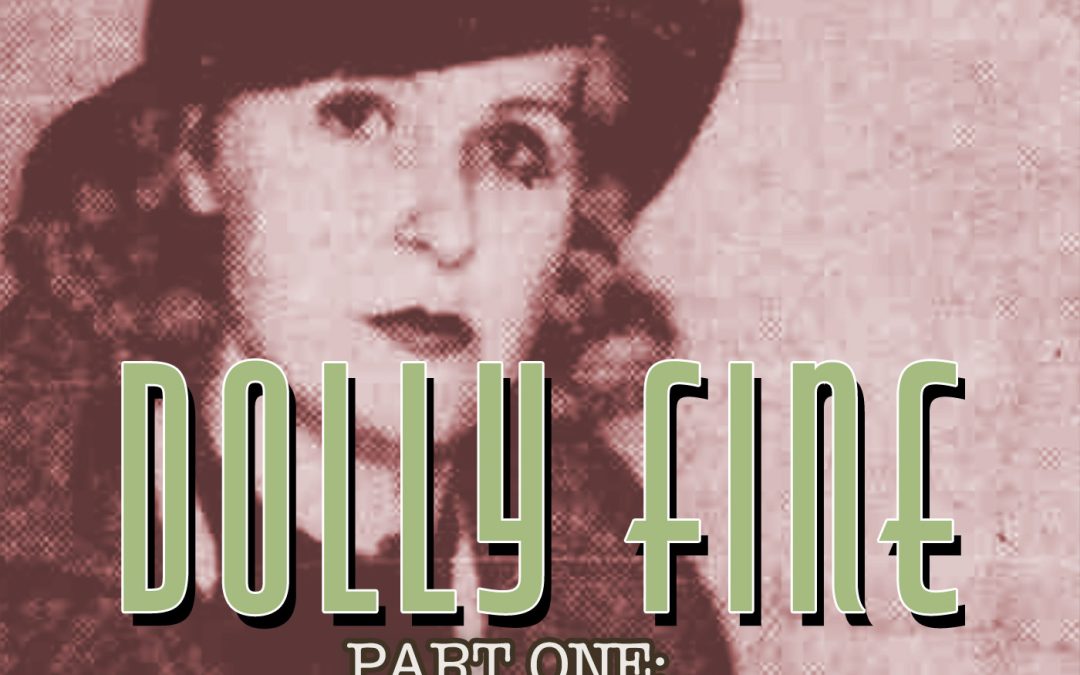
Dolly Fine was one of San Francisco’s last great madams and a defining figure of the city’s wide-open 1930s nightlife. Tall, blonde, impeccably dressed, and deeply embedded in the city’s underworld, Dolly ran one of the most profitable and professionally managed houses in town—right as Frisco’s long tradition of tolerated vice was beginning to crack under public scrutiny.
Before diving into Dolly’s reign, we take whirlwind tour of some of the city’s legendary madams, from Gold Rush pioneers like Irene McCready and Ah Toy to fan favorites Tessie Wall and Jessie Hayman. These women helped define San Francisco’s peculiar relationship with sex, money, and moral flexibility—a relationship that lasted for decades, until reformers, headlines, and political embarrassment forced the city to look too closely at its own reflection.
Dolly Fine’s story sits squarely at that breaking point. With ties to Prohibition-era smuggling, early gangster life, and a past that police later dredged up with relish, Dolly faced the full force of the Atherton investigation and a changing civic mood. Though she survived the Grand Jury and continued operating, the ground was shifting beneath her feet. Part One sets the stage for her dramatic fall—her arrest, flight, and nationwide manhunt—stories that will unfold in Part Two.
TRANSCRIPT:
Welcome to the Frisco: the Secret History Podcast. I’m your host, Knox Bronson. I have a wonderful episode for you today. part one of the Dolly Fine story, one of Frisco’s last great madams. Dolly was Frisco’s most famous madam of the 1930s. She was tall, blonde, beautiful, always smartly dressed, streetwise and gangster through and through. She ran an upscale house, made the right payoffs, and took very good care of her girls. Eventually, she ran up against the changing culture of the city and, by the end of the decade, she was gone. No one know for sure where she went, but there were rumors that she married quite well after getting out of the game.
[intermezzo]
Frisco has celebrated its many madams since the Gold Rush.
Let’s name a few …
[chime]
Irene McCready, the first documented Frisco madam in the early Gold Rush years. Her partner was James McCabe, co-owner of the El Dorado gambling house at Kearney and Washington, where the daily take sometimes exceeded $200,000 in gold dust. Remember that money was not really used in San Francisco until the turn of the century. Gold was Frisco’s currency of choice. Irene and James had a tumultuous marriage. One time when they were on the outs, she lured him to her place, perhaps with a promise of sex and reconciliation. She drugged his whiskey and, while he was out cold, shaved every square inch of his body.
[chime]
The tall, lithe Ah Toy with her aristocratic and exotic lily-bound feet, who arrived from China at the age of twenty-one and set up shop in a shanty in an alley of Clay Street near Kearney. Sometimes there would be a block-long line of men waiting to get into it.
[chime]
The beautiful Arrabella Ryan, who became Belle Cora when she married Charles Cora in the Frisco city jail where he was being held for murdering United States Marshal William Richardson. Drunk, Richardson had publicly insulted Arrabella in the lobby of a Market Street Theater in 1855. Charles shot him several days later to defend her honor. I told this story in detail in the “Call It Frisco Part Two—Sally Stanford Weighs In” episode of Frisco: The Secret History.
[chime]
Madam Maud Nelson Fair, whose marriage to the illegitimate son of a United States Senator made front page news in 1893.
[chime]
Jessie Hayman, whom the Grand Duke of the Imperial Russian Empire begged to come with him when he had to return to Russia at the end of his visit to Frisco in the 1890s. She was described as having “the figure and face of an empress, with the poise and manner of one as well.”
[chime]
Tessie Wall, Frisco’s favorite and best-liked madam of the early nineteen hundreds, who stood over her ex-husband’s dead body in 1917 on Anna Street, an alley between Eddy and Ellis streets and exclaimed, “I shot him because I loved him, Goddamn him!”
[chime]
Maude Spencer and Reggie Gamble who together ran a deluxe bordello on Mason Street. They went up against reformer Reverend Paul Smith as he campaigned to force the city to enforce the Red Light Abatement Act. The Reverend later went on a national tour with a feature film he had produced, “The Finger of Justice,” which was banned in New York State and when he showed the movie in Philadelphia, the city issued a warrant for his arrest, forcing him to flee the city in a hurry. He eventually left the ministry and became a car salesman. In later years, he lamented his campaigns against prostitution. You can see “The Finger of Justice” at the Frisco: The Secret History website.
[intermezzo]
In the 1930s, Dolly Fine came into her own as Frisco’s pre-eminent Madam. Sally Stanford, whom we all know and love, was operating at the same time, but it was Dolly who captured the headlines in the Thirties.
[intermezzo]
Little is known about Dolly Fine’s beginnings. Twelve years before she came to the attention of the Edwin Atherton and the San Francisco Grand Jury, Dolly, as a teenager and precocious gangster moll in training, acted as look-out when her gang committed crimes.
In the township of Pacfica, just south of San Francisco on the coast, she worked for smugglers during prohibition. There are several references to this, but it’s unclear what she did for them.
Suffice it to say that Dolly knew on which side of the law she stood at a very early age.
As the Examiner later wrote in 1938,
[typewriter]
Police, probing into the past, dredged up the records of a bandit gang which operated in 1925 and found that Dolly Fine, under a string of aliases, was the “moll” of that gang.
And the three men sought yesterday, police asserted, were members of the gang who have stood closely by while Dolly Fine prospered and became the woman in red, keeper of San Francisco’s most profitable brothel. All three men have long police records, have served jail terms. One of the three, police say, is Lawrence Bryan, alias Lawrence Bunger, known extensively in underworld circles as Al Brady. He is a Folsom “graduate.” Brady, police believe. is actually the brother of Dolly Fine. The other two were Fred “Dutch” Fritchen and Irby Hunt.
These three, together with William Melody, later shot to death in Chicago, were arrested in 1925 on charges of holding up “Dr.”‘ Gabor Koenigstein, chiropodist better known as Kingstone-in his office at 101 Post street. The chiropodist and two patients were gagged and trussed up tightly, $5,000 worth of diamonds and rubies were stolen.
Two women were implicated. One was Dorothy Ryan. The other was Julia White, alias Julia Black, a young dancer. Julia White or Black-police discovered yesterday, grew up to be the woman now known as Dolly Fine. Lawrence Bryan, supposed brother of Dolly Fine, stood trial and was acquitted. Fritchen and Hunt escaped trial. Melody went to prison. Dorothy Ryan vanished.
Their victim, then prominent as a boxing promoter and as a man who had had six wives and was swamped by applicants when he advertised for a seventh, passed from the public scene. All were forgotten until Dolly Fine, madame of a Bush street brothel, jumped $1,000 bail and was indicted. Yesterday, police remembered and began looking for the three men who knew Julia White and might be expected to know where Dolly Fine is now in deep seclusion.
[end typewriter]
I will discuss Dolly’s flight from justice, which made nationwide front-page news, in the next episode. The chiropodist, Dr. Koenigstein, or Kingstone, was quite a character himself, an only in Frisco type character, and I will be doing an episode on him at some point.
[intermezzo]
Dolly Fine’s business card read, “D. Fine, Contractor, 1275 Bush Street near Larkin, Office 2, Ordway 1555, San Francisco.
Dolly was one of Frisco’s great madams, her reign stretching across most of the 1930s. Her exquisitely appointed houses of frolic were filled with companionable women of great beauty.
Dolly was herself a tall, striking blonde.
Dolly took good care of her girls. On paper, she ran a house-cleaning service and the girls were her employees. She set up Social Security accounts for them and religiously made regular payments into their accounts. She offered her girls profit-sharing, which was almost unheard of in the love trade. She had another house in Pacifica, just south of San Francisco on the coast, where she and some of the girls would sometimes vacation for a few days.
She ran a clean house, made all the appropriate payoffs, and had the best defense lawyer in town, if not the nation, Jake “The Master” Ehrlich.
San Francisco had had a history of brotherly and sisterly tolerance for gambling, prostitution, and a vibrant nightlife, since the Gold Rush days. If you haven’t listened to my first episode, “Vice Defined San Francisco’s DNA at its inception,” I recommend it.
Since Dolly’s reign as a madam was the 1930s, we must talk about The Atherton Report, which shook the city to its core, as well.
[intermezzo]
I wrote in the Frisco episode The Hawaiian Princess Who Wanted To Sing, about Alice Kamokilaikawai Campbell who ran the Kilokawa Club on Bush Street, home of live music so the Princess could sing and a bounty of accommodating women in hula skirts,
When the press got to her in the corridor, she made a suggestion that wound up on Page One and that ultimately had more effect on the Grand Jury than anything she’d said inside.
“San Francisco is on trial,” she declared. “When the community is not courageous it must expect vice and crime. When one has to pay for respectability it does not seem fair. Let all good and patriotic citizens band together, raise a hundred thousand dollars, hire a private investigator and clean up the city.
The little chanteuse from Honolulu had just done the most effective singing of her career. The Princess didn’t stick around for the fireworks. She suddenly decided to marry her voice coach, a gentleman named Blickfelt, and took off for her native Hawaii.
The Grand Jury thought it over and got $100,000 with which to hire Edwin Atherton, a former FBI agent and now a private investigator. Atherton knew precisely what to do with $100,000 and a city that was wide open for a practiced peeper.
The Princess had been called into the Grand Jury after she had called the city’s Chief of Police and asked if she were being charged too much protection money by the Police and the McDonough graft machine.
Others attribute the hiring of the Ex-G-man Edwin Atherton and his crew to some ill-advised remarks made at a Rotary Club luncheon around the same time.
Curt Gentry, wrote, in his book “The Madams of San Francisco,”
[typewriter sounds]
The Atherton investigation of the San Francisco Police Department was touched off one after noon in November 1935 amidst the seemingly noncombustible surroundings of a Rotary Club luncheon in suburban San Rafael.
The speaker was John V. Lewis, Bay Area Collector of Internal Revenue; the chance remarks he dropped were two: that the madam of one San Francisco house of prostitution had attempted to deduct her payoffs to the police as a legitimate operating expense; and that some San Francisco policemen as a result were not paying income taxes. Humorous little asides.
But an alert News reporter picked up the story and began his own investigation, among other things finding, he said, police captain who had earned $100,000 from prostitution. The newspapers put on the pressure. Mayor Angelo Rossi, who had come into office in 1931 after James Rolph was elected governor of California, ordered the district attorney to investigate.
“Now, everyone in San Francisco had known-and boasted—for years that the city was wide open’ and that the police look bribes,” wrote local crime reporter Charles Raudebaugh in the San Francisco chapter of Robert S. Allen’s Our Fair City. But for an official to discuss it right out in the open was embarrassing, to say the least. Mr. Lewis’ blabber mouthing mushroomed into a face-saving investigation by District Attorney Matthew Brady. Matt wasn’t mad at anyone, but he certainly could not be left holding the bag, as the saying goes. He hired Edwin Atherton, a former G-man, to dig into the situation.” Many, however, anticipated a quick surface-skimming.
District Attorney Brady, without notifying Chief Quinn or the Police Commission, enlisted Atherton to conduct a secret graft inquiry of the SFPD. Atherton was a handsome former G-man with the “open smile of a casket salesman,” as one newspaper reported. In rapid succession, Atherton set up posh headquarters in the Keystone Apartments on Nob Hill’s west side and began spending the city’s money as fast as he could.
[intermezzo]
San Franciscans had a laissez-faire attitude toward prostitution and gambling in the city, but they did not want their noses rubbed in the amount of graft involved to keep the wheels turning. There was a line they did not want crossed, or at least of which to be made aware. Money for sex, okay; paying the McDonough brothers a large fee for permission to set up shop and making monthly payouts to the local beat cops, no. When the amount of graft was ultimately revealed, it shocked the city.
This strange revulsion to graft, or at the absence of plausible deniability in their fair city, was what fueled the hiring of Atherton and then his ongoing investigation. Needless to say, any number of civic reformers, like the afore mentioned minister, movie producer, and later car salesman Paul Smith, elbowed their way into the spotlight to fan the flames of manufactured outrage for personal gain.
Naturally, the Grand Jury at one point subpoenaed Dolly to come in to testify. She accept the subpoena willingly. When Atherton arrived at her door, she refused to open it. He summoned four policemen, who arrived with pliers and a hacksaw. She wouldn’t let Atherton into her place until they started to attack a door chain with the hacksaw.
As the Oakland Tribune reported:
[typewriter]
Dolly Fine, comely blonde, identified by the investigator as keeper of a Bush Street brothel, did not deny any of the purported conversations with Rice and other persons at McDonough Brothers, but said she ‘couldn’t remember’ any of them. She became tearful when asked if she operated a house of prostitution and refused to answer on the grounds her reply might incriminate and degrade her.
“The comely brothel-keeper,” as one paper described her, was no Tessie Wall. A blue-eyed “statuesque blonde” in her early thirties, well groomed and conservatively dressed, she bore little resemblance in either speech or appearance to the wine-guzzling madams of yore. She was not a willing witness.
Q. What time do you usually go to bed at night?
A. Well, at different times. Any time from eleven to two or three.
Q. Any time business becomes slack?
A. I don’t know what you mean.
Q. I mean when there are no patrons coming into the establishment?
A. I still don’t know what you mean.
Q. Isn’t it a fact that for the last year you have been operating a house of prostitution in the city and country of San Francisco?
- That question I refuse to answer, sir.
Q. The only ground upon which you can refuse to answer, Miss Fine, is upon the grounds of self incrimination or that the answer will have a tendency to degrade your character.
A. That would degrade my character, that’s certain.
Q. 1 am going to ask you it you remember this conversation: “Madeline, this Dolly, What’s doing?” And Madeline said: “I had a date, I could have used Lu tonight. Wanted something Chinese, Do you know of anybody I could get?” And you said; “No, but I’ll try to find someone for you. “
Miss Fine recalled neither this nor any other telephone conversations.
[end typewriter]
[intermezzo]
The Atherton Report, released on March 17, 1937, was nothing short of sensational, casting a harsh, revealing light upon the underbelly of San Francisco, a city renowned for its picturesque beauty and vibrant culture. The report detailed a sophisticated and deeply ingrained system of extortion that generated an estimated one million dollars annually in payouts to the police, about thirty million dollars today. Not bad for a city of 647,000. The primary sources of this illicit revenue were the city’s bordellos and illegal gambling joints.
A particularly damning aspect of the Atherton Report was its focus on the McDonough Brothers’ bail bond company. The report identified the McDonoughs as a central pillar of the city’s corruption network, labeling them a “fountainhead of corruption.” Their influence extended far beyond simply posting bail. The Atherton investigation revealed that the McDonoughs enjoyed an alarmingly close relationship with members of the SFPD, including high-ranking officers. They allegedly received inside information about upcoming raids, allowing their clients – often involved in organized crime – to evade arrest or minimize the consequences.
The public, long aware of the city’s seedy underbelly, was nonetheless stunned by the sheer scale and systemic nature of the corruption within their police force.
Hundreds of officers faced reassignment or dismissal for conduct unbecoming an officer. Three captains, three lieutenants, and one sergeant were fired. Five officers were indicted, but none were convicted in a court of law.
As Dolly once remarked, “There is only one mob in San Francisco. The police.”
Dolly survived the Grand Jury, but, clearly, there had been a sea change in the official view of Frisco vice. She moved operations to a new building and kept operating. Sally Stanford kept operating along with dozens of other whorehouses, gambling joints, and after-hours clubs that had long dotted the city landscape like scrumptious mushrooms.
In his wonderful memoir, “A Life In My Hands,” attorney Jake Ehrlich wrote.
[intermezzo]
[typewriter sounds]
Everybody made money with Dolly, including me.
As I have said, Dolly was one of those who came to me when the McDonough heat really began to get hot under her business career. She asked me for an evaluation of the situation, and I told her that there was no more situation; that vice was through in San Francisco. She then asked me what to do and I told her to fold her sheets and blankets and fade away. Apparently the advice she bought so expensively from me matched neither her wishful thinking nor her plans, for she stayed right with the situation and kept her bedding at its usual uses.
Even when she was called to testify before the Grand Jury she wasn’t too perturbed, although I explained to her that the best she could get as the result of such an invitation was an unpleasant and unprofitable draw. And there were other possibilities of an even uglier nature if she should make the not uncommon feminine mistake of verbally fudging a bit while under oath.
Blithely, she appeared before the jurors, clad in a chic outfit and wearing a demure smile. There is no question but what Dolly was lovely and had splendid taste in clothes; there is also no question but what her calling was well-known to one and all. Which made her coy disclaimers of knowledge about certain seamy things a little hard for the jurors to take.
When they asked her about the times when her “business became slack,” she just didn’t know what they meant and said it in just those words. Questioned about her “patrons,” she was baffled at the meaning of this word in connection with her. She was equally disingenuous in respect to all other embarrassing questions. But she hadn’t fooled anyone and when her responses and attitude were reported in the newspapers, the weight of official and public opinion began to stack against her.
I said she hadn’t fooled anyone, but now that I think about it I have to admit that I am wrong. She fooled herself. As intelligent a woman as she was, she had accepted the courtroom defeats of Atherton and the rain check given her by the Grand Jury as proofs that the status was going to remain pretty quo in San Francisco, particularly if time gave her a little leeway.
Atherton turned in his final report in May of 1937, picked up his terminal paycheck plus a generous dollop of money to cover an underestimated budget for “information,” and departed the city by the Golden Gate forever.
The investigator’s final report was on the melancholy side.
He admitted that he had accomplished little and blamed, among others, the mayor. (“In making the statement that this investigation was not supported by public officials, I have Mayor Rossi in mind.”) He also felt that the Grand Jury (which hired him) had not been constant in its love for him.
The investigation, in his hindsight estimate, had “a synthetic beginning” and was unwanted by any large proportion of the public. When the reporters saw him off to Los Angeles at the Southern Pacific Depot, they asked if he thought he’d done any good in San Francisco. Dolefully, he shook his head.
“It’ll all wind up in a whitewash,” he said, thus documenting himself as a regulation bad loser and managing to cast a vague aspersion upon the innocence of Ludolph and the others who were vindicated by due process, juror unanimity and Ehrlichian eloquence.
The press and some of the less prescient of the politicians took the attitude that $100,000 worth of nothing had been accomplished, and even the far-flung Saturday Evening Post said that from the perspective of the City of Brotherly Love it was quite clear that San Francisco “didn’t want to be cleaned up.”
One of the few really concerned persons who was convinced of all this chatter was my client Dolly. Despite a somewhat cloudy condition in the climate of San Francisco’s night life, Dolly closed her moderately pretentious place at 555 Hyde Street (“It’s Really Alive At Five-Fifty-Five,” as some unknown cab driver poet put it) and took a five-year lease on a more elegant establishment at 1275 Bush Street, a few blocks west of the fated Kamokila Club. Blithely she invested $20,000 in furnishings, and before long was doing an earthshaking business if a record of six “courtesy arrests” in the next six months is any criterion. Fines levied for all six pinches totaled $75.
But on April 24, 1938, her roof fell in. I was at the Beverly-Wilshire in Los Angeles at the time and had just retired when my telephone rang. It was Dolly’s voice, but I could sense the presence of others at her end of the line from her first words onward.
“I’m in trouble, Jake. Deep trouble.”
“You’ve just been arrested and it’s for more than just the usual things?”
“Right. Will you represent me?”
Of course I would, I replied and gave her the age-old litany of the defense attorney. “Have nothing at all to say until you see me. Make bond, smile prettily but silently at the press, and then make yourself scarce to one and all. I’ll see you as soon as I can.”
[end typewriter]
I’ll be back soon with Part Two of the Dolly Fine story: her arrest for corrupting the morals of minors, her flight from prosecution, the nationwide hunt for Dolly, the headlines, her dramatic return to face trial, and Jake Ehrlich’s masterful moves that ultimately saved her from eight felony convictions.
[intermezzo]
Frisco—the Secret History is a listener supported podcast. Main episodes will always be free. Our website is www.friscothesecrethisory.com. Visit the website for show notes. Paid tier members, starting at as little as $5 a month, will receive bonus episodes and other perks of membership. There is a one dollar tier, but that will simply give you ad-free episodes when I get some advertisers.
If you enjoy the podcast, please tell your friends about it, especially those who enjoy San Francisco or true crime history. Word of mouth is the absolute best means of promotion for any creative endeavor in this world of algorithms and the ceaseless barrage of ads, notifications, and appeals on every digital platform. If you are aware of some particular aspect of San Francisco history in the thirties and forties you would like me to research, or have a story to tell, please let me know.
Once again, I’m your host, Knox Bronson.
Thank you for listening. Until next time, please get a little crazy and call it Frisco.